From the Associated Press, gives some exposition on the shooter. Sound like someone you know?
Suspect in nightclub shooting liked talking music, listening to Pantera before playing football- ANITA CHANG, Associated Press WriterFriday, December 10, 2004(12-10) 09:13 PST COLUMBUS, Ohio (AP) --The man who shot former Pantera guitarist "Dimebag" Darrell Abbott and three other men to death at a nightclub was obsessed with the popular heavy metal band and made bizarre accusations against it, a onetime friend said in reports published Friday.
Jeramie Brey said gunman Nathan Gale once showed up at a friend's house saying he wanted to share songs he had written. The pages of lyrics were copied from Pantera, but Gale claimed he had written them, Brey said."He was off his rocker," Brey told The Columbus Dispatch. "He said they were his songs, that Pantera stole them from him and that he was going to sue them."
He later told Brey that he planned to sue Pantera for stealing his identity. Brey and friend Dave Johnson said Gale's behavior frightened them and they distanced themselves from him several years ago. But other friends said they never considered Gale capable of violence.
On Wednesday night, the 25-year-old former Marine charged the stage at a show by Abbott's new band, Damageplan, and gunned down four people including Abbott before a policeman fatally shot him.Police said Friday they still didn't know Gale's motive, and they may never find out. Some witnesses said Gale yelled accusations that the revered guitarist broke up Pantera, but police had not verified those reports.
An imposing figure at 6-foot-3, Gale had made people uneasy even at the tattoo parlor, staring and locking them into conversations about heavy metal music. When he played offensive line for the semi-pro Lima Thunder football team, he psyched himself up before games by piping Pantera into his headphones, coach Mark Green said.
But Green had not pegged Gale as the type to go on a shooting rampage. "It wasn't like he was a loner," Green said.
Gale had had minor run-ins with police since 1997 but wasn't considered a troublemaker, according to police in his hometown of Marysville, 25 miles northwest of Columbus.
Gale had served with the 2nd Marine Division at Camp Lejeune in North Carolina until November 2003, when he was discharged after less than half of the typical four-year stint, Marine spokeswoman Gunnery Sgt. Kristine Scarber said. She declined to explain the discharge, citing privacy rules.
A few hours before the shooting, Gale had showed up at Marysville's Bears Den Tattoo Studio, where often he stared at people and forced them into conversations, manager Lucas Bender said.
"He comes in here and likes to hang out when he's not wanted," Bender said. "The most pointless conversations."
On Wednesday he asked about having the studio order tattoo equipment for him, tattoo artist Bo Toler said. Toler told him no, and Gale got angry and started yelling, he said.
"Last night was actually the first time I noticed his temper," Toler said.
No one answered the door Thursday at the Marysville home of Gale's mother, Mary Clark. A message left on her cell phone was not returned.
The violence at the smoke-filled Alrosa Villa club came just after the opening notes by Damageplan, the band formed by Abbott and his brother, drummer Vinnie Paul Abbott, after they left Pantera. Gale dodged two band members, grabbed Darrell Abbott and shot him at least five times in the head, witnesses and police said.
In less than five minutes, Gale had also killed Erin Halk, 29, a club employee who loaded band equipment; fan Nathan Bray, 23, of nearby Grove City; and band bodyguard Jeff Thompson, 40.
Two other band employees, Chris Paluska and John Brooks, remained in a hospital Friday morning with undisclosed injuries. Paluska was listed in good condition and Brooks in serious condition.
On 911 tapes released by authorities, one caller said, "I heard quite a few gunshots and I think somebody in the band definitely has been shot."
A short time later a man called and said: "He's on stage right now. He's got a gun." A moment later, the man said, "He just shot again," and then, "He's got a gun to somebody's head."
Despite a drizzle and temperatures in the 40s, more than 200 people turned up for a vigil Thursday night in the club's parking lot.
Shawn Sweeney, 22, played "old-school Pantera" on an acoustic guitar as a half-dozen young men held a blue tarp over his head and sang along as a crowd gathered.
"This is beautiful, this is absolutely beautiful," Sweeney said.
Friday, December 10, 2004


Thursday, December 09, 2004
2004 seems to be the year of Fonal. I've mentioned a few fantastic avant folk/drone things these industrious Fins have released in recent months, all deserving of much devotion and appreciation, but had no idea label head Sami's work under the Es moniker was so gosh-darn beautiful in its own right. Sparse chamber music, warm tape noise, samples, guitar, effects and ethereal fem vocals come together in an inspired, glitchy production worthy of the finest in the genre on "Kaikkeuden Kauneus ja Kasittamattomyys." Think Labradford, Islaja (who I believe lends her vocal talents) and Popol Vuh, but maybe released on the Touch label.
More goodies floating up from down below, some courtesy of the PseudoArcana imprint. I'm still playing catchup here, as there's already a slew of newer releases I ain't heard, but that's alright for now, because the "Crescent" CD-R by Claypipe, co-released with Root Don Lonie For Cash, will keep me busy many late nights with it's deep meandering drone swells, archaic hums and bowed strings, all giving way to tonal eruptions of the most brilliant, elusive colors. Fine stuff for anyone reared in the ways of early John Cale/Tony Conrad. Sunken is a new duo of Antony Milton and Stefan Neville of Pumice exploring similar improvised space, but this time via organs, loops and guitar. It's a testament to the players that they can conjure dense, living soundscapes from thin air with such resonating results. Checkout the cyclical builds of 25 min "Spa" to get the gist. The 3" CD-R "Springtime in Saturnalia" is Davenport's tribal entry for the label--opens with muffled noise, vinyl scratching, a jet flying overhead as birds and insects chirp and rustle right next to your ears. From the constant environmental hum rises serene raga-folk workouts and droning ethnic noise that slowly develop into a stately slow groove (Pelt and Jackie-O Motherfucker comes to mind) and totally smokes in a non threatening manner. The Wooden Cupboard apparently has some relation to the Skaters, a mysterious ensemble I keep hearing about but have yet to hear. 3" CD-R "Boiling the Animal in the Sky" is out there garage/free noise comprised of elephantine wails and farting strings, stuttering percussion, ominous sirens and more. Harder to get into than the Davenport. The shrill sound quality and warped cut-up production makes me think Angus Maclise a lot of the way, but I like the crude meditative slant the second track takes halfway through more than the ethnic incantations. And finally comes Keijo and Friends (again?! you say!) with the 2CD-R, "Unfolding Emptiness/Decomposing Dawn and Dew," one a solo slab of post industrial earth drones and broke-dick folk meanderings, the other trio free noise screechiness indebted to early AMM.
"Live at Club Donut" (Holy Mountain) is a fine solo vinyl only document from experimental psych guitar maestro Steven Wray Lobdell. Few today are willing to merge classic acid streaked solos with these kinds of earth-shaking industrial noise squalls. The results thrill across 45 mins of live solo improvs that alternate between searing electric ragas and dissonant looped breakdowns. Lobdell pulls it off in a way that brings to mind both Manuel Gottsching and Keji Haino, among others. Last Visible Dog have dropped a cpl more musical cherries on top of the creamy pop parfait with Peter Wright's "Distant Bombs" and Pumice's "Raft." The former sees kiwi loner Wright weaving cautious spells of layered guitar/drone interactions in an approach that brings to mind a more digital answer to the kind of endless dream-states that Fripp and Eno used to explore so brilliantly in the mid 70s. Best I've heard from him yet. Pumice, on the other hand, is the work of one Stefan Neville, employing guitar, effects, tape noise and voice, in ramshackle home-made pop and noise concoctions that have become far too rare in recent years. Alastair Galbraith and Chris Knox come to mind, which I suppose serves as high praise to some and might register indifference to others. Whoa be to those others. "Live Gyakuryu Kokuu" is a totally killer 2 track live album from dark psych trio Kousokuya, who've apparently been part of the scene longer than PSF Records has. First track is a stomping side long heavy blues thing, somewhere between High Rise and Fushitsusha; the second sees the trio climbing further into the free jazz void with utterly compelling results. In other words: raw garage jams played with the kind of paint-peeling intensity PSF has embodied for the last 20 years or so.
I actually liked Pantera for about 5 minutes in the early 90s, and then spent the next ten years or so wishing somebody would shoot 'em. Never actually thought I'd get my wish, though: Apocalypse at the Alrosa Villa.
Sunday, December 05, 2004
Here is a great ramble clipped from the latest Aquarius update as to why it's not cool to hate Nirvana. Couldn't agree more. I am and have always been a Nirvana fan....
"NIRVANA "With The Lights Out" (DGC) 3cd+dvd 57.00 Been trying to figure out what to write about this for a while now. Every time I sit down to write it, I feel like I'm trying to write a euology for an old friend. Which should speak volumes. We knew this was coming. And man, were we excited. And it is not a disappointment in any way. If anything, it's more than we could have hoped for. See, everyone loves Nirvana. Everyone. Those of you who say you don't are just trying to be c'ool'. Sort of like the people who talk about how the Beatles suck. The Beatles did not suck. They wrote more perfect pop songs than any band in the history of rock and roll. Nirvana also don't suck. And are also responsible for some of the best songs ever. It's not cool to pretend you don't like Nirvana. Not at all. In fact, it's unbelievably UNCOOL. Why deny yourself some of the most important, visceral music of the last 15 years? Because it gets played on MTV? Because jocks blast "Smells Like Teen Spirit" after the big game? Nope, sorry. Not good enough.
Nirvana were one of those bands we could all love. Heavy enough to appeal to headbangers, raucous enough to still be punk, but equipped with a pop sense unrivalled, and thus able to whip out the most beautiful pop song in the world without a second thought -- usually sandwiched between two swirling snarling blasts of stage destroying chaotic rrroooaaaar. But that's part of what was so charming about Nirvana. Even when they were huge, they acted like you or me. Stupid jokes, smashing guitars, unlikely covers, ripped jeans and t-shirts and greasy long hair. It was like your pal or your older brother was snatched out of your suburban hellhole of a life and made a rock star. And how could you not love that (once you got over wishing it was you)? Which also goes to why it was such a blow when Kurt Cobain died. I literally cried. At the time I remember thinking "Why the fuck am I crying." I mean, it's not like he was a friend of mine or something. But he was something special. To me. To everyone I know. And Nirvana was something special. Our generation's Beatles? Maybe. But definitely the most important band of the nineties. Responsible for reshaping popular music, killing off hair metal, and giving us music that would be the soundtrack to our lives: breakups, mixtapes, road trips, broken hearts, life and death, fucking and fighting. Sounds like hyperbole but it's really not. This band was and is really important to me, and millions of other folks. Which is pretty remarkable. After the death of Cobain, and after getting over the sheer sadness and loss, one could not help but think about all the amazing music and the songs that would now never be written. Callous maybe, but the music is what made us love him/them. Their recent greatest hits disc offered us the unreleased "You Know You're Right", which was at the time the greatest thing we could've heard, a song as good as any of their others, seemingly pulled from the ether. And now we have this. A collection of what is supposedly everything. or at least everything worth releasing. And it is absolutely fantastic. I literally got all teary listeing to this, and the DVD had me all choked up as well. Can't remember the last time a record did that to me.
So, what's on it? If you're like me, it hardly matters. Just knowing that it's stuffed to the gills with rare and unreleased Nirvana songs and I'm sold. If you need more than that, here goes. Don't sell back your greatest hits though, "You Know You're Right" only appears here as a solo acoustic recording from 1994. This version may not rock as hard, but it is a lot more intense and personal. The box is basically in chronological order, so disc one is definitely gonna hit the spot for those of us (like Allan) who loved Bleach the best. Demos and acoustic tracks and live on the radio, this is all Holy Grail sort of stuff. Live versions of Zeppelin's "Heartbreaker" and "Moby Dick" done in suitably ramshackle chaotic Nirvana style. Live versions and demos of tracks that would show up on Bleach. But by far the most exciting tracks are the unreleased songs. "White Lace And Strange", "Help Me I'm Hungry", "Mrs. Butterworth", "Grey Goose", "Token Eastern Song" and more. Disc two has less unreleased tracks but lots of alternate versions of tracks from future records, as well as loads of b-sides (their split with the Jesus Lizard, maybe one of the best Nirvana songs ever) and covers (Wipers!) and a big ol' chunk of solo acoustic versions of classic tracks that sound even more intense and harrowing performed sans band. Disc three brings us close to the end. A handful of demos and more solo acoustic versions of songs you already know and love. Highlights include the track "Sappy" which was a secret track on a benefit compliation and was originally titled "Verse Chorus Verse" and is another of their best curiously relegated to being hidden uncredited at the end of a random comp ("Train In Vain" anyone?). Also "Marigold", the only Nirvana song sung by Dave Grohl, an obscure b-side, that hints at Grohl's Foo Fighter future. A sweet and jangly Vaselines cover and more. The set ends with a solo acoustic version of "All Apologies" and if you hadn't gotten all emotional yet, this one will definitely do it to you.
The DVD is pretty amazing as well and adds to the whole feeling of Kurt being an old friend who passed away. Mostly home movies, the first chunk is a party / rehearsal in Krist's mom's house and features the band rocking out in a panelled, carpeted basement, while various rockers sit around drinking beer. Cute and sad, and funny and sort of remarkable how amazing they were as a band even so early on. The rest of the DVD is made up of various tracks filmed live in various locations, from small clubs to huge arenas. Lots of hilarious onstage banter, lots of drum kit destroying, and lots of powerfully off kilter versions of all of the best Nirvana songs. Beautifully packaged in an oversized hardcover book, on the front an embossed metal plate featuring the band in their Sunday best, as if they were at a funeral. Or a wake. Because as sad as this is, and as much as this makes us miss someone we felt we knew as well as our best friend, and a band who meant more to us than almost any in our memory, under the circumstances, we couldn't be happier."
Friday, December 03, 2004
I finally got some more goodies from the primo Finnish CD-R empire 267 Lattajjaa recently, the same people responsible for Avarus's astounding "A-V-P" a year or two back (and due for reissue I believe). Another one worth getting in on the hunt for is The Buried Civilizations' "Tunnels to Other Chambers" CD-R. Half of Thuja, with a cpl other lovely souls, weave levitated tone poems of long passed tribal elders in 14 short tracks, all bathed in the translucent glow of primitive mysticism that comes with virtually all Jewelled Antler releases. Equally evocative is Davenport's 3" CD-R "Little Howling Jubilee," which starts with a murmur of free clatter and drones and builds to quite a mind-blowing barrage of the kind of tribal jam insanity that Amon Düül used to churn out with some consistency at the end of the 60s. By the time those moaning chants come in and that damn dog starts to barkin'...an inspired mess it is. I raved about Grey Park way back when here, and 3" CD-R "A Preparatory Course for Agents Going Abroad" is just as good, and a bit different. Instead of trembling dissonance and deep drone, at first we get a languid, quasi pop melody (think Low) beset with moog drones. The other two tracks explore a more post industrial space with minimal synth and tapes noise, a bit closer to what I'd expect. "Soon With the Sun" is another recent disc (I think he's released about 5 so far this year) by weird noise elder, Keijo, and it's a gorgeous echo-drenched whirl of springy drones, chimes, tapes of streaming water and bubbling electronics, but it's not electronica, no sir-ee, Bob. There's a roughness to it all, but mixed as a fully formed ethnic drone collage, so that it goes down ever so smooth. And last but never the least from 267 Lattajjaa, Anla Courtis (of Reynols) gives us the "...y el resplandor de la luz no conoce limites" 3"CD-R, a searing beam of aural sunlight that builds on wave after wave of fuzz guitar, organ, mouth harp and hawk-bells to a primo wall of textural drone, and fasten your seatbelt at about 11 min. in when the the shaft gets lashed with conduits of shrieking distortion.
"Wire on the Box: 1979" (Pink Flag) is a CD/DVD package that offers the rare priveledge of seeing Wire (probably the best "punk band" to come out of England) in their prime in a live show that was originally recorded for German television, making us the lucky ones when the setlist includes classics like "The 15th," "Practice Makes Perfect," "I Feel Mysterious Today," "French Film Blurred," "Map Ref," "A Touching Display," "A Question of Degree"...you get the idea. Incredible. Nice sound quality, effective proscenium style production on the video, and the songs are the songs--as good as minimal art punk and pop gets--yet more stripped down than the studio classics, revealing the explosive energy as well as the depth of Mike Thorne's production on those studio originals. There's even a 20 min sit down with the band. Seems like I've been waiting decades for this, and I've even seen Wire live, but not in '79. Mute has finally reissued the early albums by the most excellent Virgin Prunes, pick of the litter surely being the Colin Newman produced "If I Die, I Die," one of the most atmospheric, caustic and totally right on post punk albums ever. Joy Division and Wire appreciaters need it asap, but don't go expecting any copy-catting. The Prunes had a unique vibe that simply puts them in the same league. Another band the Prunes are worthy of comparison to is Australia's The Birthday Party, whose former lead singer, Nick Cave, has taken to writing gothic literatur and playing sad, beautiful ballads with his band The Bad Seeds in recent years, but not so much this year. 2CD set "Abattair Blues/The Lyre of Orpheus" (Mute) is a barn-burner, but not of the raw, art damaged variety that marked the B'day's, more of the classic steamrolling gospel tinged big band blues punk variety. On tracks like "Get Ready For Love" and the amaaaaazing "There She Goes, My Beautiful World," Cave and his band (short one Bargeld, whose own band released a monster earlier this year) pick up where they left off on last year's "Nocturama" (the awesome extended noise raveup, "I'm On Fire"), and throw in a gospel choir and plenty of hooks, awe-inspiring dynamics, and some of Cave's most, er...worldly lyrics to date. Heavy as shit and utterly essential (and I should mention there are some beautiful pop moments here and there, a few sad slow bits too; it's simply more varied than the last 4 Bad Seeds albums). It actually sounds like a punk rock Spiritualized in places, and I thought that long before reading it in Arthur. Makes me feel like you really can die and be reborn. A must-see live proposition.
"Wire on the Box: 1979" (Pink Flag) is a CD/DVD package that offers the rare priveledge of seeing Wire (probably the best "punk band" to come out of England) in their prime in a live show that was originally recorded for German television, making us the lucky ones when the setlist includes classics like "The 15th," "Practice Makes Perfect," "I Feel Mysterious Today," "French Film Blurred," "Map Ref," "A Touching Display," "A Question of Degree"...you get the idea. Incredible. Nice sound quality, effective proscenium style production on the video, and the songs are the songs--as good as minimal art punk and pop gets--yet more stripped down than the studio classics, revealing the explosive energy as well as the depth of Mike Thorne's production on those studio originals. There's even a 20 min sit down with the band. Seems like I've been waiting decades for this, and I've even seen Wire live, but not in '79. Mute has finally reissued the early albums by the most excellent Virgin Prunes, pick of the litter surely being the Colin Newman produced "If I Die, I Die," one of the most atmospheric, caustic and totally right on post punk albums ever. Joy Division and Wire appreciaters need it asap, but don't go expecting any copy-catting. The Prunes had a unique vibe that simply puts them in the same league. Another band the Prunes are worthy of comparison to is Australia's The Birthday Party, whose former lead singer, Nick Cave, has taken to writing gothic literatur and playing sad, beautiful ballads with his band The Bad Seeds in recent years, but not so much this year. 2CD set "Abattair Blues/The Lyre of Orpheus" (Mute) is a barn-burner, but not of the raw, art damaged variety that marked the B'day's, more of the classic steamrolling gospel tinged big band blues punk variety. On tracks like "Get Ready For Love" and the amaaaaazing "There She Goes, My Beautiful World," Cave and his band (short one Bargeld, whose own band released a monster earlier this year) pick up where they left off on last year's "Nocturama" (the awesome extended noise raveup, "I'm On Fire"), and throw in a gospel choir and plenty of hooks, awe-inspiring dynamics, and some of Cave's most, er...worldly lyrics to date. Heavy as shit and utterly essential (and I should mention there are some beautiful pop moments here and there, a few sad slow bits too; it's simply more varied than the last 4 Bad Seeds albums). It actually sounds like a punk rock Spiritualized in places, and I thought that long before reading it in Arthur. Makes me feel like you really can die and be reborn. A must-see live proposition.
Wednesday, December 01, 2004
I'm backed up over here like a truck driver with chorizo poisoning, so these are gonna be (semi) short and sweet: Metal Album of the Year appears to have arrived in the form of Lair of the Minotaur's "Carnage, Fucking Carnage" (Southern Lord). The Gods hath ejaculated 8 Mordorian blades straight into thine ears. My jank asshole hasn't been this battered since I was baptized into the Church of Satan. Fans of Slayer, Venom, Mayhem, The Obsessed and Thee Dark Lord best get smokin (and I mean smokin) . Goddamn.... I like it, I reckon, because they're tight as fuck and as crushingly adept at mid-tempo biker riffage as they are the flailing grind bits, blast beats, and occasional DOOM tangents--masterful sludge, literate leads, great vokills, too. Speaking of singers of note, Wino (St. Vitus, The Obsessed) has unleashed the second album from The Hidden Hand. In case ya didn't know, the dude sort of helped forge what would become known as the "doom" or "stoner" sound way back in the 80s. With "Mother Teacher Destroyer" (Southern Lord) he and his collaborators waste no time in emerging as one of the prime movers in the scene Southern Lord has come to epitomize, with politically charged metal anthems that often approach the psych abyss and occasionally dive right into the deep dark nothing. Wino sounds pristine, his solos on fire, his band, his songs, his titles ("The Deprogramming of Tom Delay" for instance)--all first rate on a record that strikes a good balance between sneering discontent and stoned accord, and it's more digestable than most doom today. My homies in the Melvins recently hooked up with Lustmord for "Pigs of the Roman Empire" (Ipecac) to see their funkafied southern/epic sludge metal augmented with extended bouts of the 'Mord's icylationist drones. Works well, but I'm not sure it's as successful as their own stab at crude ambient noise, the live "Colossus of Destiny" (Ipecac), but then it explores more minimal space and offers its own kind of metallic mind solvent. THUMS UP! Now in the realm of heavy, you can go much further, if willing, and a band like England's Aufgehoben will seriously take you to the other side. This is some demented "free noise" that is hard to put a finger on, aside from it's studiously performed, uber-distorted, post Mainliner/Skullflower jazz skronk-that must be heard by those who like their aural masochism textured and blistering. It's the tension and the builds, the way quiet rumbles and squiggles erupt into paint-peeling, super loud, metal on metal shred death that demand focused attention and fevered awe. "Anno Fauve" (Riot Season) is as good as this sort of thing gets, but hardly for the faint of heart.
Semi-recently received a package from Foxy Digitalis of newer items in their Foxglove CD-R series, chock full of many a goody, among them United Bible Studies, another assemblage of the Druids of Deserted Village. "The Lunar Observatory" is a mesmerizing slab of rustic, low-key improv and gorgeous drifting jazz balladry with piano lulls and sax daze. Loverly. Vapaa weaves low-moving organic machine hum, whoosh, scree, field recordings and more into oscillating dream worlds on "Tilat." Musti Laiton conjures his (their) own brand of hypnotic drone murk and more ambitious Krautrockery with stumbling reverb-drenched acid leads and even the occasional prog bombast, but "Survival Horror" is mostly a mellow groove with some effective production flourishes. A.M.'s "Tasman" is 4 tracks of amp buzz, violin, radio noise and reverb built up into shimmering pyramids of devotional awe (sans overdubs!). Absolutely perfect for noise bathing. Nice to see Hush Arbors and Mr. Foxgloves himself, The North Sea, teaming up for the "Singing Through Moss and Mist" split CD-R. Hush Arbor's First track is a long minimal piece with nature sounds and some slight acoustic plucks, while the second is a darker, more rumbling drone mass that sees our nature freak probing the darkest regions of (inner) space. The North Sea opens with effects drenched electric guitar that slowly builds in volume/density before delivering an amalgam of ambient tones, chirping cicadas, shakers, flutes, bowed strings and languid acoustic guitar. Oxygen for the soul. Included in the same package: free folksters Juniper Meadows ("Pistols for Madeline"), Kiwi sound sculptor Peter Wright ("Desolation, Beauty Violence") and Agitated Radio Pilot ("Like Flightless Birds"). FD has had a ridiculously prolific output this year, but the quality and depth of this stuff speaks for itself, and more importantly it offers people 'round my neck of the woods a chance to hear some things that we might not get to otherwise. Nothing wrong with spreadin' that love butta thick.
Semi-recently received a package from Foxy Digitalis of newer items in their Foxglove CD-R series, chock full of many a goody, among them United Bible Studies, another assemblage of the Druids of Deserted Village. "The Lunar Observatory" is a mesmerizing slab of rustic, low-key improv and gorgeous drifting jazz balladry with piano lulls and sax daze. Loverly. Vapaa weaves low-moving organic machine hum, whoosh, scree, field recordings and more into oscillating dream worlds on "Tilat." Musti Laiton conjures his (their) own brand of hypnotic drone murk and more ambitious Krautrockery with stumbling reverb-drenched acid leads and even the occasional prog bombast, but "Survival Horror" is mostly a mellow groove with some effective production flourishes. A.M.'s "Tasman" is 4 tracks of amp buzz, violin, radio noise and reverb built up into shimmering pyramids of devotional awe (sans overdubs!). Absolutely perfect for noise bathing. Nice to see Hush Arbors and Mr. Foxgloves himself, The North Sea, teaming up for the "Singing Through Moss and Mist" split CD-R. Hush Arbor's First track is a long minimal piece with nature sounds and some slight acoustic plucks, while the second is a darker, more rumbling drone mass that sees our nature freak probing the darkest regions of (inner) space. The North Sea opens with effects drenched electric guitar that slowly builds in volume/density before delivering an amalgam of ambient tones, chirping cicadas, shakers, flutes, bowed strings and languid acoustic guitar. Oxygen for the soul. Included in the same package: free folksters Juniper Meadows ("Pistols for Madeline"), Kiwi sound sculptor Peter Wright ("Desolation, Beauty Violence") and Agitated Radio Pilot ("Like Flightless Birds"). FD has had a ridiculously prolific output this year, but the quality and depth of this stuff speaks for itself, and more importantly it offers people 'round my neck of the woods a chance to hear some things that we might not get to otherwise. Nothing wrong with spreadin' that love butta thick.
Saturday, November 27, 2004
One glaring omission from the previously posted list of Saddest Songs could be “Alifib” by Robert Wyatt. The first song on the second side of his classic “Rock Bottom” feels like a voyeuristic look at a mythical sea creature, struggling for its last breath of air, or in this case love, drowning in a phosphorescent sea, its gills slashed from a fisherman’s hook, lungs contorting for breaths that wont come. Wyatt coos and awes lyrics that combine fever dreams and “domestic bliss” in a series of touching non-sequiturs that leave you confused and shaken at the same time. Such is love and its many apparitions.
For those who like their sadness sans irony, I give you…
10 More of the Saddest Songs in the World...I'm talkin' real sad here, like fold up your tent and go home sad. Any one of these would make a a fine suicide note.
For those who like their sadness sans irony, I give you…
10 More of the Saddest Songs in the World...I'm talkin' real sad here, like fold up your tent and go home sad. Any one of these would make a a fine suicide note.
1. Nick Drake “Which Will”
2. Big Star “Holocaust”
3. Steve Von Till “We All Fall”
4. Gram Parsons and Emmylou Harris “Love Hurts”
5. Alexander “Skip” Spence “Diana”
6. Peter Jefferies “On an Unknown Beach”
7. John Prine “Sam Stone”
8. Jandek “First You Think Your Fortune’s Lovely”
9. Kan Mikami “Never Before”
10.The Carter Family “No Depression in Heaven”

Guy Maddin’s screwball melodrama, “The Saddest Music in the World,” raises an interesting question when probing the unfathomable depths of the broken heart: How sad is too sad? When does sadness stop being a real emotion and become a joke? And where does one draw the line between the truly sad and the patently ridiculous? Maddin’s Vaseline swabbed head-squeezer posits that question and answers with a succession of absurd oddballs vying for the top prize of saddest music-maker in the world, and even offers some resolution when all the despair is finally acknowledged, the sadness felt, the good guys redeemed and the evil burned alive. Can’t stand those ambiguous endings, ya know? “Saddest Music in the World” takes its exaggeration into the stratosphere, beyond it and finally back again, only to reveal that the most somber blows are always born in the family. ‘Course, many have taken their own introspective glances at the frail fabric of familiar relations, but no one’s done it as gleefully and with such lucid abandon as Maddin does in this film. See it all costs.
In honor of this singular achievement, now available in the sensible DVD format, in no particular order, I give you...
Ten of the Saddest Songs in the World:
1. Coil “Tainted Love” (from “Scatology” Force and Form CD) – The Soft Cell classic reworked by everyone’s favorite ambitiously gay duo as a dire industrial dirge, complete with Marc Almond himself on uber-sad vocal. An uneasy collision of nightmarish ooze and primitive synth doom informs a track that pulses ever so slowly, and eventually implodes via surging electro swells, sampled choral noises and its own seething discontent. It feels almost like a parody of the original, or is it just a very real attempt at capturing the apocalyptic emotions that accompany any bitter breakup?
2. Roxy Music “In Every Dream Home a Heartache” (from “For Your Pleasure” Virgin CD) – This is the Roxy song that will convert you if you’ve never been converted. As fine an example of proto goth-EEK art rock as you will find, with Brian Ferry recounting an upscale, spiritually vapid existence with grim detail in vampyric croon. The end result is thought-provoking to the chilled bone, sort of like “Citizen Kane” gone glam in its depiction of dead souled mannequins consuming perfectly mixed martinis, rendered with the slow-burn of ominous foreboding which erupts as one of the most thrilling musical catharses in rock. Ferry describes his nightmare cum reality with the voice of a sardonic insider who can’t stop laughing as he spills his beans. “It’s only a song…it’s only a song…it’s only a song…” Or is it?
3. Velvet Underground “All Tomorrow’s Parties” (from “Velvet Underground and Nico” Verve CD) – An early classic buoyed on the minimal piano tinkering of John Cale and Nico’s stern delivery. It tells about a girl who today could be a supermodel or one of those Hilton hookers, consumed by her partying lifestyle, and perhaps losing her soul to the night in the process. It’s tragic for sure, not to mention light-years ahead of its time, but damned funny too and just as addictive as the lifestyle it depicts with its wailing wall of distortion and relentless piano strikes, but never does our narrator condemn the protagonist. She even sympathizes, but always with the junkie’s contempt.
4. Brian Eno “Some of Them are Old” (from “Here Come the Warm Jets” EG CD) – I question whether Mr. Eno himself even knows what this one’s about, but as does all of his material from this period, the song lands squarely in the realm where the surreal comes to shed its tears and the rest of us look on in giddy wonder. Eno charges the everyday with a kind of otherworldly communion where the long dead still converse, flatter and annoy the still living. How to describe this song, other than it opens on a near religious note, segues into a hillbilly wake and then explodes like the sun breaking through the clouds with its final chorale—a kind of sadness engulfed in aural epiphany.
5. Beach Boys “Surf’s Up” (from “Surf’s Up” Capital CD) – Another ambiguous moment of divine intervention, it works on a similar level as “Some of them are Old,” opening with a sad piano/vocal lament, Brian Wilson intoning cryptic word strings that border on Zen lunacy. Then all that’s left is our mighty hero, paddling in an oceanic expanse where he confronts his Maker and a million, billion stars. The multi-harmony outro is both purifying and sadly nostalgic—a memorial for something lost, but what? God only knows…
6. Flamin’ Groovies “Teenage Confidential” (from “Shake Some Action” Aim CD) – Later Groovies at their finest in a tear-streaked waltz of musical pathos. The protagonist begs and pleads with his lover not to fold to the lure of gossip and reject his devotion as a result. Yes, this may very well be the very first emo song, but more importantly it’s a mind-blowing rush of pure power pop that both reveals the dire reality of teenage love affairs and the absurd hyper-real drama of it all. Are the ‘Groovies really letting it all hang out in an ace slab of vintage pop heartbreak, or are they just a goofing on all those silly 60s breakup anthems…maybe both?
7. Nick Drake “Been Smokin’ Too Long” (from “Time of No Reply” Rykomusic CD) – This early gem from the prince of lonely hearts captures him in a rare moment of what could be considered self inflicted cheekiness. It’s a gorgeous down-tempo blues with Drake riffing on his sensitive stoned hipster persona so perfectly realized on “Five Leaves Left” less than a year later. The narrator blasts his love of smoke and substance and resultant bad karma, ultimately damning himself, “ain’t nothin’ gone right with me/ must be I been smokin’ too long.” Granted, it’s an obsession with this kind of self imposed existential doom that would dog Drake to his end, but here he's giving us a wink and saying, “It’s OK to grin and sing along.”
8. T. Rex “The Slider” (from “The Slider” Polygram CD) – Quintessential Bolan combines his vintage boogy-psych grooviness with obtuse lyrics that, actually, make sense, detailing the bummer life can be and the resultant “slides” that come with, ultimately confirming that nothing nips a bummer in the bud like some good old fashioned chemical rebalancing. Bolan and his band unleash a raw descending blues stomp beat, all manner of voodoo shakers and acid drenched soul harmonies before a beautiful fade of mind-enveloping strings bliss. Sad bliss, though.
9. Vashti Bunyan “17 Pink Sugar Elephants” (from Ptolemaic Terrascope compilation #? CD) – The golden corded chanteuse recounts the sad scene of the titular goodies, frozen in manufactured complacence--so pretty to see, so vacant to know--in a downcast blues gem that decimates the fragile senses in just under two minutes, and climaxes with the depressing realization that one of the little fellows is merely, “a factory made pink sugar elephant given to children for treats after tea.” Sounds trite, don’t it? It’s more than that though. Bunyan’s mastery of vocal inflection, rhythm and imagery here is about as poetically subversive as any folk poppy ditty from the last 50 years.
10. Daniel Johnston “Tuna Ketchup” (From “The Early Recordings Vol. 1” Dualtone 2CD) – A later track from DJ’s first self-release captures the sadness of unrequited love with first person recollections of seeing the object of his affections in a parking lot, at a park in the summer; he even goes so far as to “let her walk all over me and insult me too…because I like her.” Ahh, the trials and tribulations we suffer for love. Of course you can’t help but wonder if Daniel ever had the nerve to even talk to her in the first place, and just what does “Tuna Ketchup” have to do with anything?
Tuesday, November 16, 2004
Got a big pile of things that've been piling up for weeks or longer to get at least some mention of in here, but in the meantime, The Curtains "Vehicles of Travel" just arrived in the mail, and this is precisely what I need at this point in the year: a warm, weird art pop racket that could be compared to Pere Ubu, Captain Beefheart, even the Clean, but the first track is a dead ringer for a more lo-fi Jim O'Rourke. In other words, I love it.
Also, just got this in my inbox...little over a month after Instal, check out the lineup at this year's Kill Your Timid Notion. AMM, Mirror and Thuja on the same stage on the same night? Fuckin' 'ell.
AMM+ Malcolm Le Grice
Mirror w/ a film by Bill Morrison
Thuja + Keith Evans
Perlonex + Ulrike Flaig
Text of Light [lee ranaldo, alan licht, uli krieger, tim barnes]
Tower Recordings
La Cellule d'Intervention Metamkine
Tabula Smaragdina: Jürgen Reble + Thomas Köner
Sachiko M + Anthony McCall
Monday, November 15, 2004
Sin City, Texas...
Just above Austin, there's a place called Sun City. I've never been there, but hope to get there one day, or at least get a picture of myself beaming cross-eyed and jovial like an American monument in front of that big green exit sign. Of course the Sun City Girls, the band, originated in Sun City, Arizona over 20 years ago, and currently reside in that gray mecca of coffee and tears, Seattle, WA. These Sun City Girls (who are actually three GUYS--two brothers named Bishop and an older one name of Charles Gocher, shares a birthday with, what's his name? Manson--Charles Manson, and that day just happens to coincide with the same day of a rock show in Austin, TX, November 12th. I couldn't make this stuff up if I tried!). Lot had happened since the Girls' last Texas visit. A certain shrub had taken to flight. Two big towers were destroyed. A lot of people everywhere died. Some of it was broadcast. And the Girls had taken on such varied endeavors as clearing out their massive archives with the Carnival Folklore Resurrection series (now at something like 13 releases); the masters of noise and psych over at Eclipse Records had taken it upon themselves to reissue the first 20 (or so) Sun City Girls albums in thick black double vinyl editions. And then comes word of this mysterious Sublime Frequencies entity, a label devoted to compilations of world music that the Bishop brothers had obtained through field recordings and other questionable means over the last 20 years. A label that has already taken off im some circles with chronicles of street and radio music from Bali, Syria, Libya, India and much more delivered as alien radio transmissions and brain scrambled aural collages. I strongly suggest further investigation if ya wanna know the what-fer in terms of world dance parties and spiritual possessions. I guess this all suggests that the Girls' presence in the underground is vast and constantly evolving to the point that it's a self consuming ouroborus of aural enlightenment the likes of which the world has never really known before. Just how does one describe the full frontal assault that is the Sun City Girls, anyway? Carefully, and possibly while not in a cogent state of mind. The Sun City Girls are a trio that derives its sound from bombed out, stumbling garage rock; the free jazz rumble and clatter of Sun Ra; the twisted jazz punk of Captain Beefheart, along with tons of ethnic music embellishments from Europe, the Middle and Far East, but as with any great mysterious cult group (Residents, early Eno, Velvet Underground, Negativland and the Bonzo Dog Band among them), a healthy sense of irreverence dominates the proceedings. The Frogs, who SCG's shared a split single with, are another touchstone. It should also be noted the brothers Bishop were in a band that featured Mo Tucker in the early 80s called Paris 1942. In other words they're firmly ensconced in the American underground substrate, and have never really come up for air. No buzz bin videos in their past. No fluke hits. Respectable, but the resultant brain damage due to this continuous lack of oxygen has left its debilitating mark. Given the relative subversiveness of their live shows and album covers (such as a photo of the trio in full terror regalia holding instruments as their trusted weapons), that's probably a good thing. To fully appreciate what the Sun City Girls have to offer requires stepping back a bit from the lunacy of it all and viewing their procession of strange sounds (and images) through a panethnic filter where Monty Python's brand of sardonicism has the firmest grasp of our world understanding. In other words, don't take shit so seriously and you'll be fine.
With all this and more in mind, my friend and I hit Emos early that cold Friday night with high hopes, but the place was empty. A worried guitarist in the noise/psych unit Rubbles is fearful of a weak turnout. My friend and I decide to head over to a place called Lovejoys and drink coffee and baileys and other alcohollically tinged concoctions to keep our itchy throats warm. He notices the fluctuating timbers of the constant drone of the crowd noise, a kind of mass verbal improv that everyone's noticed at one point or another, and suggests I record it next time I'm in town. Smart guy. We then spend 15 mins discussing the best place to put the mic, settling on a high book shelf not too far from the front door. We hit Emos just in time to catch the beginning of Rubbles, sadly and surprisingly missed Weird Weeds. Rubbles are pretty incendiary though, with members of Tex psych punk luminaries the Butthole Surfers, Ash Castles and the proprietor of Emperor Jones Records among its ranks. They make a throbbing clamor that's a pure aural bombardment for a good 40 mins or so. Mid 80s Sonic Youth, Primordial Undermind, even the Swans come to mind. Painful to behold at extreme volumes, yet Rubbles are capable of instantly transforming the entire club into a canted framed, strobed out, acid zombie freakout. The disorienting light show compliments the messiness of it all. They play their set behind a white sheet as various images are projected onto it.
During the Rubbles set I say hola to Alan Bishop, who suggests we're in for a good show. And we are. The SCG's have covered an absurd amount of ground in their 23 years. Their albums range from trashed out cover records to extended acid streaked journeys through Dante's Inferno (centered around the the husky demonic croon of Gocher), Malaysian sound collages, art-farty punk, free jazz, ethnic surf rock and more. Things start with Rick Bishop molesting his guitar at obtuse angles, fingers climbing up and down the neck like a double jointed spider as various skewed notes trail from amps in spherical ribbons of fully malformed jazz. Then enter Alan and Charles on bass and drums, their timing down to the millisecond as the trio jumps, whoops and jerks with a cohesion reserved for single body masses. It's not really possible to list album titles, but a lot of stuff from the Carnival Folklore series (some of which was reworked/rereleased versions of older material) was in there. Throughout Alan Bishop would assume any number of characters and cast all sorts of demonic incantations in the form of "angry Arabic street vendor" or a "possessed Balinese witchdoctor" that proved feverish, spontaneous and perfectly choreographed. In between the more typical ethno punk clatter, the trio would fall back in on themselves in warped lounge jazz cuts, during which Gocher would come out from behind his kit and don his twisted lounge singer persona. Later on, during a particularly evil sounding collision of downtuned Sabbathian sludge and Arabic chanting, Bishop reveals that he's wearing a tee with everyone's favorite world terrorist threat on the cover, but my favorite part might just be later in the show, when all three began cursing and yelling, each in his own nonlinear babble-verse where at various points familiar SCG characters and demons would materialize, but I was mostly lost in the layered effect the three mad men held together... Hilarious and fucked up, they all may as well have been shouting "Yes, we are weird" in multiple languages, some of which were probably invented on the spot. If anything really surprised me it was the fierceness of their attack. There was pretty much no let up during their almost two hour set, but I was never less than enthralled at any time. My Sun City cherry hath officially been decimated. I do not mean to suggest that the SCG's lampoon other ethnic cultures, more that they have a deep fascination with and empathy for these so called primitive religions and use this in their performance as a kind of theater of the absurd and a serious spiritual comment on the world today, which they might liken to the Kali Yuga of Hindu lore in spiritual terms.
Wednesday, November 10, 2004
A John Peel video interview from two years ago that can be viewed with real player. The Datsuns were supposed to moderate, but showed up realy late or not at all. An informative visit with the man and the myth, including a reference to disembowling George Dubya Bush, "the most dangerous man on the planet."
Monday, November 08, 2004
Nektar
"Journey to the Center of the Eye"
(Dream Nebula/Eclectic)

This issue of “Journey to the Center of the Eye” is possibly a shameless attempt at squeezing a few more dollars out of the Krautrock revival circuit. It features a kooky SACD 5.2 Surround Remix layer, meaning that you can throw this on any SACD ready DVD player (probably not as hard as it sounds) and listen in surround sound. Of course I don’t have surround sound, but my square friend down the road sure does, and the price is more than fair. It’s comparable to when the Flaming Lips’ “Zaireeka” came out, and you always had to plan a big Zaireeka freakout hours in advance, complete with 4 different stereos to get the full quadraphonic effect going. Nektar isn’t even German in the first place, but it’s a common misconception. These English had been jamming about in the same scene that originally bore the Beatles, and after them the Monks and you know the rest. All the psychedelic cross cultural pollination (including meeting and playing with the one and only Vangelis) nourished the combo’s psych bombast in a complimentary way as their music became increasingly more demented.
There is a “Prelude” as their often is with any righteous prog classic. It segues into the fantastic “Astronaut’s Nightmare,” a barrage of archaic organ and building percussion that blasts off as feral psych jamming in the Amon Duul II/ early King Crimson vein. Taff Freeman’s organ throughout is phenomenal in battle with Roye Allbrighton’s metallic/acid guitar squalls. There’s even a “21 Century Schizoid Man” styled fuzz box on the vocal. This gives way to the ethereal melotron-laced instrumental “Countenance,” erupting with charging guitar trills at the finale. Next up are a couple more instrumentals which deftly combine familiar psych traits and pure head ringing in a production that’s about as lysergically charged as anything I’ve heard from 1971.
Throughout this album there is cohesion, from the loose theme of a larger concept to its classical suite-like structure. It all flows together to tell some larger cosmic adventure exploring the looming question of nuclear war and more—not such a far cry from what you Black Sabbath and Necronomicon’s were singing about ‘round then. But there is often a pop appeal too, summed up nicely in the bonus inclusion here of the first Nektar single, “1-2-3-4” b/w “Do You Believe in Magic?” (not the Lovin’ Spoonful song). The former is a funky slice of prog pop with “do-do-do” harmonies, and the latter easily achieves singalong, toe-tapper status, which they would explore more incessantly on later albums, such as the underrated “Down to Earth.” No real surprise then that this debut comes highly recommended to those who can’t get enough of first wave krautrock and acid tainted Brit invasion lunacy. It’s basically what one might expect from a British band formed in Germany in 1969, and that’s anything but predictability. I’ll have to get back re that whole Dolby Surround thing.
Friday, November 05, 2004
Rock of Ages
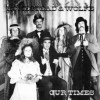
Homestead and Wolfe
"Our Times: The Gold Star Tapes 1973-75"
(Anopheles Records)
Mom once suggested I should try meeting a girl at church. Not surprisingly, I responded with something like, “No way, I’m cool! I need to meet girls at record stores or on college campuses.” But I also knew that she was onto something. There is a certain caliber of individual found among the hallowed halls of religion: gals with their heads on straight and their hearts in the right place. Yet choosing the right one can be so damn hard. It’s not as easy as picking a new world leader. You might pull the mother of God. You might snag a frigid schoolmarm with designs of bringing the final judgment down on your ass. Something like “Our Times” swings the pendulum back towards the sanctity of (good ol’) homespun American church values with its breath of warm air and soulful, cascading melodies.
Homestead & Wolfe is comprised of members of a church congregation, and their sole album, recorded from '73-75 and privately released in '75, is not your typical Holy Roller choral affair. It’s the music of a rock band, and, yes, a pop band. There are hints of folk and country in there too, as well as other influences. Formed by Ernie Bringas (onetime member of early '60s singing duo The Rip Chords, then youth minister of the Good Samaritan United Methodist Church in Cupertino, California, located at the intersection of Homestead and Wolfe), this ensemble is that rarest of blessings—a hobby band that’s also an exercise in melodic song craft of the highest order. The nine songs that comprise the original release of this hidden treasure are remarkably accomplished, literate slices of wry social observation and haunting musical eloquence cast as homespun folk pop.
The truth is this is not amateurish at all. This is not the Langley Church Project. Bringas had connections and realized that his “band” was more than just a weekend gig, so he took them to Gold Star Recording studios in Hollywood, the same place where the Beach Boys and tons of others, including a younger Bringas, had recorded many a sweet soulful melody. He took full advantage of the opportunity and used seasoned session players, though they were always performing songs that the band had written along with their own harmonies, based on the vivid arrangements of Joanne Avery. The mastery displayed here is largely thanks to the depth of Avery’s voice and vision, but this is also the work of a unified, capable musical ensemble, informed by experienced leadership and a sense of exploration that is practically dead in mainstream pop music today. I wasn’t so sure of all of the above till I listened to the first half of this album a good seven times all the way through without interruption.
“Slow Down” is a timeless bit of AM pop perfection where every instrument is given full room to breathe and interact. Janice Gundy’s resonant lead vocal is simply a joy to behold over a melody that’s familiar and neatly arranged, yet always maintains a warmth indicative of productions of the era. The guitar, bass, percussion, organ and harmonies of this track could not be more perfectly induced, while Jay Dee Maness’s constant, ethereal presence on pedal steel perfectly straddles the tightrope between maudlin excess and haunted tonal poetry. “Love Comes Through My Door” features another rush of heart-wrenching pedal steel and heaven sent harmonies to powerful effect. These songs are timeless, and the performances are pretty much flawless. Same goes for the bouncy “King of the Mountain,” a more obviously religiously themed piece, but never do these folks leave the realm of artistic expression behind to push forward some agenda. It seems the overriding themes of Homestead & Wolfe are love, tolerance, inclusion, devotion, and even a healthy sense of cynicism—the obvious result of trying to live the good life in America circa 1974. The gut-wrenching “If I Never Show” is a fine illustration. Over a bed of dripping pedal steel, finger picked acoustic guitars and no percussion, Avery sings, “the drums now are silent / the prophets are few / the streets all are empty / where marchers came through” as the opening to a painful letter to a lover lost to combat. Sandy Denny could not have done it any better. “See the Children Die” on the other hand is recounting of Wounded Knee told with tense emotion and unflinching honesty, performed with real eloquence. The piece builds with a lone tom and shaker, the pulse of Native tribalism. Over this, guitar and electric piano mimic a surreal cavalry call. Janice Gundy’s slightly deeper alto perfectly conveys the grim details with a depth that has me once more reaching for Sandy Denny and Karen Carpenter for comparisons.
Nestled alongside all these more obvious traits is a general datedness that could feed a tendency to mock or dismiss such a seemingly square ensemble. For reasons outlined above, that would be a detriment, but without question there are a few moments that could and maybe even should arouse a chuckle or two. Take the springy chorus harmonies on “Your Freedom’s in Question.” I know what you’re thinking, it’s a song about the ongoing struggle for the soul of man, and it is! But it’s also a fierce indictment against Nixon and the Watergate era wrapped up as equal parts roots country pop and flailing post Who psych pop. It’s an amazing piece of work by any stretch of the imagination. And “Beat of the Drum” is a blatant bit of mid/late 60s garage psych archeology that has to be heard to be believed. Closer “Mary Jane,” about the lure of pot and other illegal substances, rightly combines a sense of stoned bliss with cautionary lyrics about the grim junkie lifestyle.
All of this comes courtesy of Anopheles Records out of San Francisco, a label that till now was mainly known for fucked up garage psych and an excellent live album by Australian art punks, Venom P. Stinger. Homestead & Wolfe seem to stick out like a sore thumb in such a roster, but in truth they are a band who played for themselves, for the love of a good song, and they didn’t really care what anyone else thought but maybe their friends and family. So, if you like the names mentioned above, and Gram Parsons, or the Byrds, or Nagisa Ni Te, give “Our Times” a spin or three.--from a forthcoming update of Foxy Digitalis.
Wednesday, November 03, 2004
I'm pretty bummed currently. I'm not really a very politically motivated sort of guy. Can't stand know-it-all lunkheads on either side of the aisle, but lately, it's been impossible not to have some opinions, hopes and fears about this country and the world. Kerry was not really my knight in shining armor, but in the end he struck me as a good enough guy, a real enough person, right down to his somewhat screwball approach on the campaign trail. What lacked in flare or so-called scruples was made up for with passion, integrity and intensity. And his wacko wife would've made the coolest first lady in decades. He was finally emerging from his self-spun cocoon of mega rich career politicking as someone who could actually be a world leader, but it was too late. Maybe he never did have a real chance. Maybe the idea of real choice in America today is mostly an illusion. One starts to think, when someone like Eminem floats a fast ball like "Mosh" right over the plate and P-Diddy's coercing da mutha fuckin yooth vote on MTV, maybe a little compassion can prevail on a world scale. Maybe some reverberations can be felt right here in our communities, and our own fucked up inner cities.
In the end the same production values that make something like MTV such a cultural force to be reckoned with came back to bite its favorite political party on the ass. This year, it was all about the Republicans. Their machine was bigger, their support broader, their drama more dramatic, their hearts apparently deeper(?). Since when is the party of your father and other oil tycoons the party of the heart? It's what the US media says, with images of Dubya standing strong, shoulders wide, nostrils flared like John Wayne in "Stagecoach" as he spurns on his bold warriors. And there's talk of "the glow" that apparently comes with meeting the man. I never did, so I can't confirm or deny. Thing I'm getting at is this: Apparently everyone's favorite dumbass (which is actually a carefully orchestrated persona that has made Dubya a highly accessible and electable man to yr typical bumfucked JimBobs of the world--ie those who elected the man) has a real knack for making people feel a kind of awed reverence when he meets them. He is literally John Wayne with a direct link to God. And people blindly trust it. They trust a man who continually invokes the name of God, missing the point that he's exploiting a deity to justify his own agenda, just as certain suicide bombers are doing halfway around the world. It's OK for him to do it though. He's invoking the name of our God. I'll never fully comprehend the duplicity of asking God to bless a people as you order one group to go slaughter another. Why bring His name into it at all? God bless those who live a life without ever having to take another. God help those who don't. Never more than now have I been so ashamed of my country's obsession with image, facade, violence and greed.
Yet, as any right leaning financial conservative will tell you, America--leader of the "free world"--must come first at a time of such peril. People must die, hopefully just not on our soil. I'm surrounded by republicans of every stripe where I live, and I actually welcome it. The bombardment of skewed opinion and good old fashioned hate keeps me on my toes. 'Course there are democrats like that too, fools bent so far to the left they come back spinning around on the right.
What became really important following March of 2003, and why something as obviously biased and quasi-fictional as "Fahrenheit 9/11" is an essential blip on the national consciousness, is we need to be critical of our leaders. We have to scrutinize their every action and denounce scumbags like Bill O'reilly and those of his ilk every chance we get. We need to realize that every piece of information received is contextual and biased, for obvious and human reasons. Al Jazeera does not support the violent overthrow of our society, but it does pray we leave their homeland, and it even goes so far as to air opinions by those who wish to see America destroyed. It's free press, the American constitution in action. Love it or hate it, deal with it. In the coming years these scattered, "radical" opinions will only multiply and converge as our military might in the region becomes stronger. "Wiping them all out" will not solve the problem. History has taught us the best way to overthrow a nation is not with force, but with the media and subtle mind control in the guise of the looming specter of FEAR on the horizon. It worked in America, I'm sure it could work in Iraq.
Sunday, October 31, 2004

Charlie Tweddle self-recorded (in ‘71) and privately released (in ’74) “Fantastic Greatest Hits” (Companion Records) in an edition of 500. It’s a stoned mix of ramshackle country psych pop and more dusted sound collage strangeness. Take the first track: a simple bit of plaintive folk-pop, like Dylan jamming with the Fugs. It’s a brilliant little number because on the surface it’s just a quaint relic of the 60s, but buried a bit deeper in the mix are gorgeous acid coaxed electric squiggles and trills, and rambling bass, that all morph into the sounds of animal farm life in the morning. Yes, I am suggesting that this sounds like something that might be found on the Jewelled Antler label today. Other tracks are closer to run-down mescaline-soaked versions of Folkways gems with just enough tape and studio trickery to make them quite absorbing. A loan howl mutates into a jarring blast of distortion. Warped fiddle or tape noise inform almost every song, which are mostly nothing more than acoustic and/or electric guitars and a foot stomp, clap or lone cymbal crash. The last half of the album is a collage of drones, insect and night sounds meshed together, all just in time for a hippie Halloween.
Saturday, October 30, 2004
And...

…“These Villages” (Soft Abuse) is Steven R. Smith’s third album under the Hala Strana name. I’ve come to the conclusion that what Smith does here is comparable to what Alan Lomax used to do with home and field recording. It has a similar warped, out of time quality. Traditional and untraditional instruments coexist in a frail harmony with occasional ambient sounds. But instead of capturing traditionalists in their homes and on the street, Smith conjures all the strange musical spirits of old Eastern Europe himself, combining a wide array of plucked and bowed string instruments, percussion and more with digital and analog recording techniques into something unique, and quite beautiful. His production is the perfect sound-bed for these grinding scrapes, haunting drones and more to become entangled and occasionally flower into incandescent sound dreams ranging from the most minimal piano strike to damaged chamber folk swells. So much is covered in a record that suggests the world psych devotions of Popol Vuh, Tony Conrad, early Velvet Underground, Jewelled Antler Collective and more.

…“These Villages” (Soft Abuse) is Steven R. Smith’s third album under the Hala Strana name. I’ve come to the conclusion that what Smith does here is comparable to what Alan Lomax used to do with home and field recording. It has a similar warped, out of time quality. Traditional and untraditional instruments coexist in a frail harmony with occasional ambient sounds. But instead of capturing traditionalists in their homes and on the street, Smith conjures all the strange musical spirits of old Eastern Europe himself, combining a wide array of plucked and bowed string instruments, percussion and more with digital and analog recording techniques into something unique, and quite beautiful. His production is the perfect sound-bed for these grinding scrapes, haunting drones and more to become entangled and occasionally flower into incandescent sound dreams ranging from the most minimal piano strike to damaged chamber folk swells. So much is covered in a record that suggests the world psych devotions of Popol Vuh, Tony Conrad, early Velvet Underground, Jewelled Antler Collective and more.
Friday, October 29, 2004
At one point during the eclipse Wednesday night the moon actually resembled a glowing pumpkin, slowly reaching a darker shade of blood red. I watched it from the parking lot of a rundown apartment building on the edge of downtown. Despite the seemingly mundane surroundings, it was dark enough, and there was just enough space between leaves of the surrounding wall of trees to see it fine. At one point I actually thought I could see a sliver of a beam of the sun skirting the top edge of the moon, but it was probably just the blur of slight cloud cover. I was enjoying the near silence, but it would've been nice to have Simon Finn's "Silent City Creep" (Durtro) running through my brain right about then. I know a thing or two about the silent city creeps among us. This CD EP may have only been sold at the recent concerts, but it was easy enough to hunt down otherwise, and totally worth it too since it easily rivals his work on "Pass the Distance." Think it was recorded in '04 and has a slightly more controlled atmosphere across five songs of surprisingly potent song-writing. The more damaged inclinations of Distance are less visible in favor of early Cohenesque somberness and poignant, vivid word strings. The Ivytree's "Winged Leaves" takes a more ethereal glance at the earth and moon spirits. Glenn Donaldson's follows up to his album under the Birdtree moniker comes as 12 more environmentally induced folk pop blissouts. It's artfully packaged by Catsup Plate, eloquently littered with minimal ethnic drones and fractured folk lullabys, featuring Glenn's fragile, pop vocal to stunning effect. Tanakh's "Dieu Deuil" (Alien8) on the other hand is a decidedly more full band affair. Jesse Poe's first album after his relocation to Italy (there's a newer one that just came out) is stronger than the debut. Brings together a broad diversity of musical cultures into haunting, direct folk-pop/chamber music that always exhibits a darker, hazier undercurrent. Makes me think of Dirty Three, Mr. Cohen and Fred Neil. Sterling psych production all around. Kemialliset Ystävät's "Alkuhärkä" (Fonal) is the best LP I've heard from the Finnish free folksters yet. It's kind of hard to describe what they do accurately--there are precursors in the clattery drone blues jazz of No-Neck Blues Band, the stoned trance grooves of prime Krautrock--yet this is a genuinely unique, hypnotic, original merging of the living and the long dead into vivid aural spirits. The songs are short, making it all the more impressive the impact KY can have in just under 90 seconds.
Tuesday, October 26, 2004
First Greg Shaw, founder of Bomp zine and Records, dies of heart failure. He was one of the first and loudest proponents of the underground in the US, and still was to his dying day. And now John Peel, the greatest DJ in radio history, dies of a heart attack in Peru. Peel was a force of positivity and beauty in a soulless industry. He championed the coolest punk bands, recorded astonishing Peel Sessions albums for some of my favorites (Can, The Fall, Wire, This Heat, Napalm Death to name a few), and he refused to bow to corporate suggestion. The diversity of his programming was unparalleled. He loved EVERYTHING in the music world, that is if it was worth loving. No bad genres, just bad music. He didn't play the game like the dickless wonders in control of American commercial radio. He was real. He will be missed. More info here.
My Smile dream has come true. I just watched Brian Wilson and an ensemble of 18 play a wide variety of BB hits and Smile in its entirety. Seeing that old pillsbury dough boy on stage was sort of like watching Davy Crockett wrestle a bear *wink*. A mystical experience? You bet ya.
I swear this is my last Beach Boys remark for at least a day.
np: Maher Shalal Hash Baz "What's Your Business Here, Elijah?"
I swear this is my last Beach Boys remark for at least a day.
np: Maher Shalal Hash Baz "What's Your Business Here, Elijah?"
Subscribe to:
Posts (Atom)